Yongju Kwon b. 1977, Daegu, South Korea Works and lives in Paju, South Korea
Yongju Kwon is a sculptor who stages how matter is organized—by labor, logistics, and upkeep—before it ever becomes image. Working through casting, binding, and suspension, he immobilizes tools and packages, routes water through simple devices, and folds horticultural care into fabricated rocks, so that extraction and maintenance, support and strain, flow and stoppage are all legible at the scale of sculpture. His materials are blunt—sling belts, cement sacks, iron oxides, cast frames from discarded hardware—yet they read as postures and portals, where industrial standardization meets small acts of care. This approach is most legible in his Pigmentary Sculptures (안료조각).
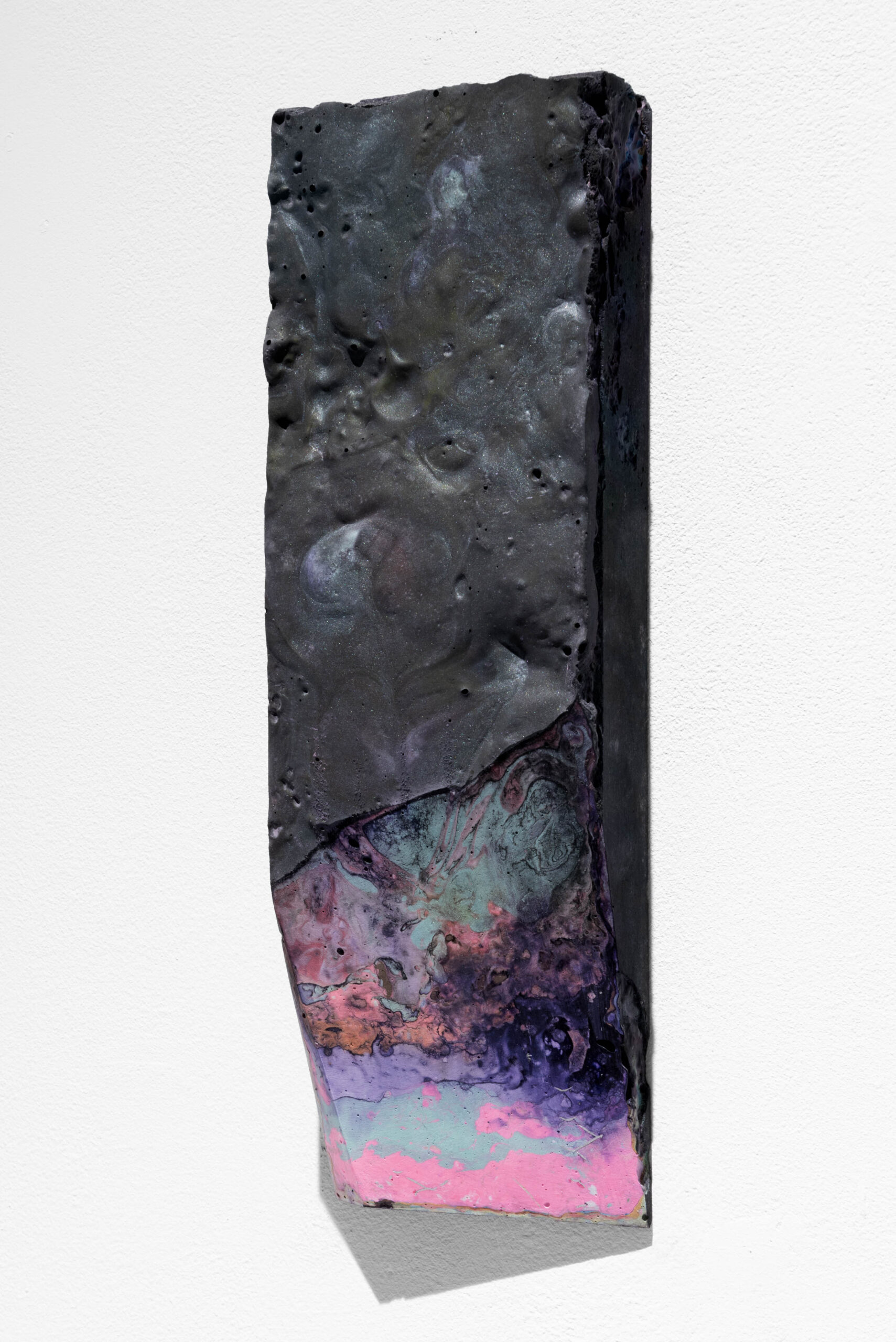
Pigmentary Sculpture 25-3-2 (안료조각 25-3-2)
2025
Fiberglass mesh, plaster, pigments
40 x 6.5 x 20 cm
In his Pigmentary Sculptures, industrial pigments—including iron oxide—are deposited, fixed, and cast onto planar and volumetric supports so that color appears as the outcome of chemistry, labor, and supply chains. Casts of sling belts and cement sacks, or frames built from discarded industrial elements, hold states of delay, stoppage, and sedimentation; the work shows how a tone becomes standardized, licensed, and circulated before it ever becomes “beautiful.” Color is not an image but a record of process.
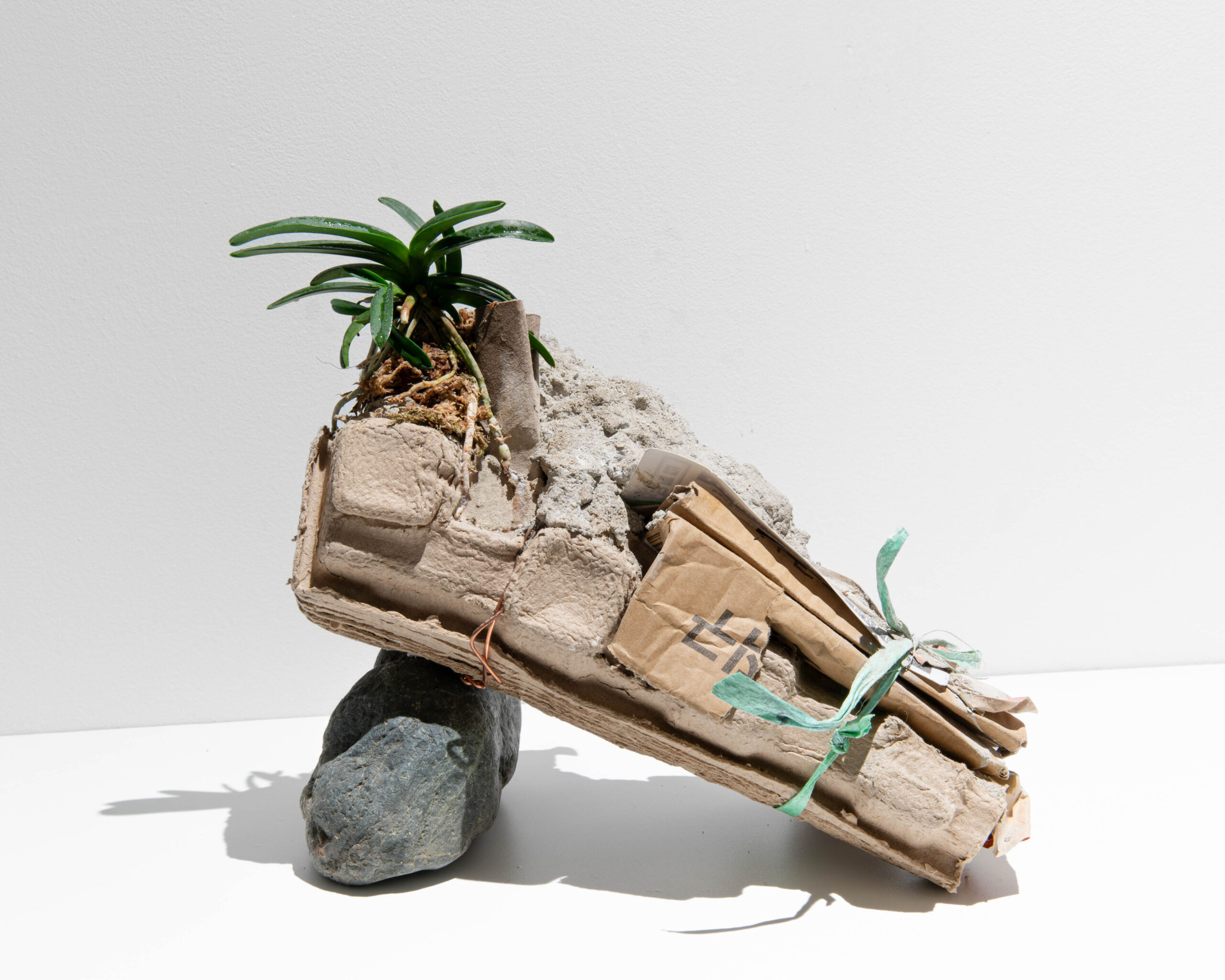
Miniature Stone Garden (석부작)
2025 Cement, waste paper, egg carton, and orchider
31 x 15 x 16 cm
In Seokbujak, Kwon mounts orchids onto cast cement fragments formed as ersatz rocks. These palm-scale “micro-landscapes” expose the fabrication of the natural: faux weathering, industrial aggregates, and horticultural care folded into a single sculptural unit. Read together, Seokbujak and the pigmentary works link origin and maintenance—how matter is extracted, named, and stabilized, and how small supports can act as portals where time (oxidation, erosion, tending) is legible. Kwon’s sculptures do not illustrate critique; they operate it, making the industrial and the botanical, the standardized and the handmade, meet in quietly rigorous forms.