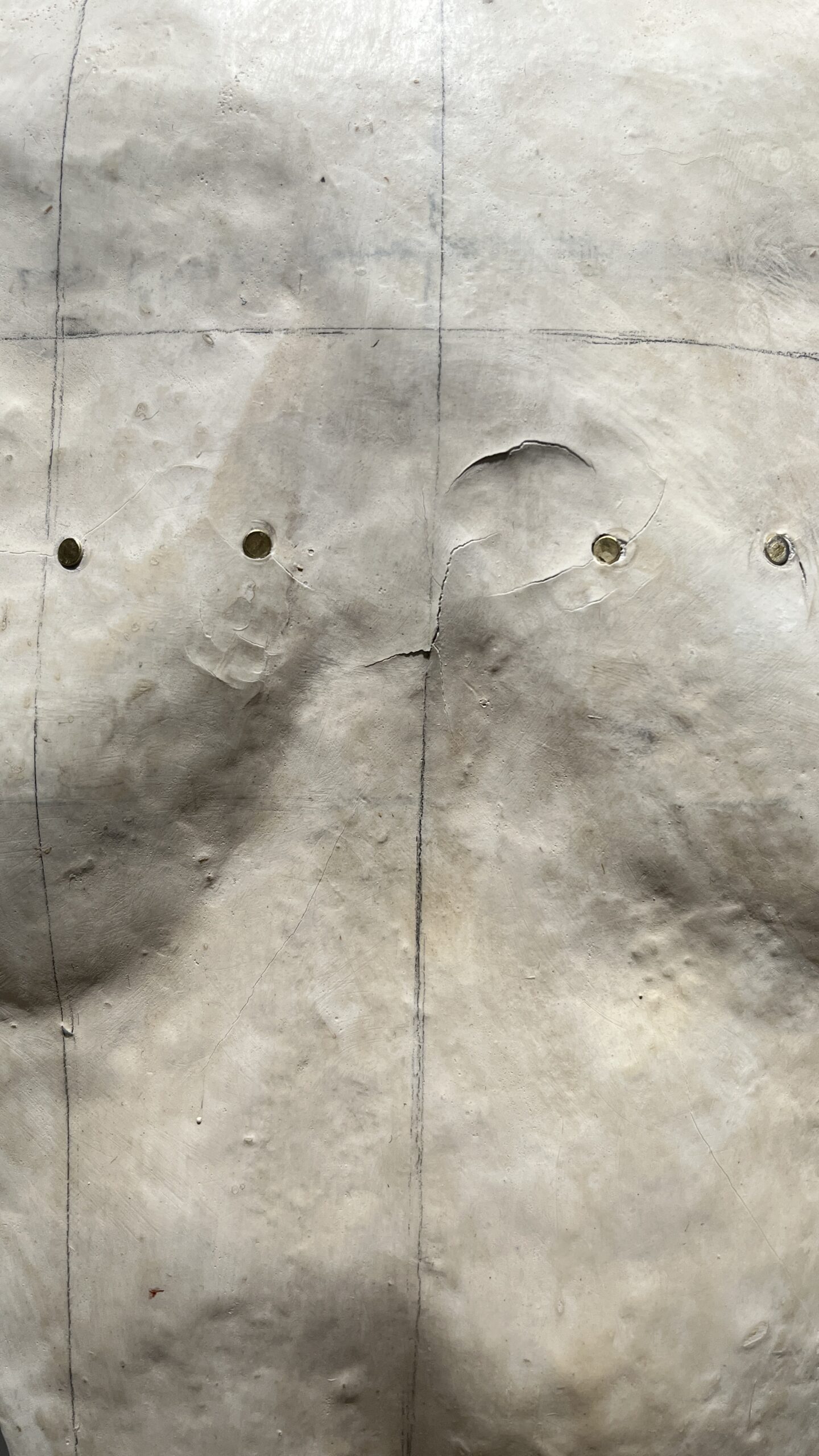
이창현의 조형은 구조화된 역사 속에서 분절되어 잊힌 신체의 실제를, 익숙한 인식의 틀을 다시 짚는데서 출발한다. 완성된 신체를 재현하는 대신, 그는 손, 등, 가슴처럼 테일러링 구조 안에서 분할된 단위들을 호출한다. 이 단위들은 정면적 형상으로 제시되지 않고, 무언가의 잔류처럼 배치된다. 종이, 감광된 천, 이면지, 패턴지 같은 재료들 역시 기능을 다한 물질이자, 시간과 노동의 흔적이다. 작가는 이들을 조립하고 덮고 다시 만지며, 하나의 형상을 향하지 않는 조형을 구성한다. 그가 참조하는 것은 완성된 형이 아니라, 형상이 어떤 감각과 구조를 통해 만들어지는가에 대한 층위다.
Chang Hyun Lee’s sculptural practice revisits the frameworks through which perception and history have segmented and omitted the body. He evokes bodily units—hands, backs, chests—once divided within tailoring systems. These forms do not assert themselves; they linger like residues, nearly overlooked. Materials such as paper, photosensitive fabric, discarded sheets, and pattern paper carry the marks of time and labor, having long outlived their original function. Through layering, covering, and repeated handling, Lee composes a structure that does not point toward a single form. His focus remains not on the final image, but on the strata through which form begins to take shape—where sensation and structure first start to entangle.