IAH는 뉴욕 기반 작가 메간 미애 리의 아시아 첫 개인전 《The Cat’s Meow》를 선보입니다. 메간 미애 리의 작업은 스펙터클과 믿음, 그리고 실패가 오늘날 우리가 세상을 보고 스스로를 수행하는 방식을 어떻게 형성하는지에 대한 집요한 관찰에서 출발합니다. 이번 프로젝트의 핵심은 카라오케라는 행위 자체가 지닌 드문 퍼포먼스적 조건에 있습니다. 카라오케는 잘해야 하는 경쟁의 장이 아니라, 시도하는 순간 자체가 하나의 수행이 되고, 많은 경우 실패가 미리 예상되며 또 허락되는 무대입니다. 이때의 실패는 굴욕이나 패배와 다릅니다. 누군가를 설득하기 위한 완벽한 수행이 아니라, 불완전함이 그대로 진행되는 동안 비로소 드러나는 작은 자유—욕망이 감당 가능한 형태로 머무는 시간—이기 때문입니다. 메간은 바로 그 잘하지 않아도 되는 순간에 관심을 두고, 그 순간이 어떻게 우리 시대의 감정 구조와 얽혀 있는지를 전시장 전체의 리듬으로 번역합니다.
이 전시는 라스베가스의 카라오케 바 Cat’s Meow에서 송출되는 라이브스트리밍을 서울의 낮 시간대 안으로 끌어들입니다. 관객은 대낮의 갤러리에서 타인의 한밤을 마주합니다. 정오의 정적과 심야의 과열이 같은 공간 안에서 한 호흡으로 교차할 때, 우리는 ‘내 시간’의 바깥에 있는 타자의 리듬을 감각하게 됩니다. 메간이 말하는 시간의 타자화는 바로 이 지점에서 작동합니다. 서울의 밝기 속에 라스베가스의 밤이 비칠 때, 관객은 단순히 다른 도시의 장면을 보는 것이 아니라, 항상 켜져 있는 세계의 조건—언제나 누군가에게 보여지고, 언제나 기록되는 삶—을 몸으로 체험합니다. 이 시차는 단순한 기술적 장치가 아니라, 동시대 인간이 ‘보여짐의 구조’ 속에서 어떻게 자아와 욕망을 유지하는가를 드러내는 구조적 메타포입니다.
메간은 라스베가스를 한 도시의 이미지로 재현하는 대신, 그 도시가 작동하는 방식을 해부합니다. 전작에서 다루었던 데이비드 카퍼필드의 끝나지 않는 쇼와 하워드 휴즈를 둘러싼 도시 신화는, 성공의 서사가 어떻게 자아를 가두는 형식이 되는지를 보여주는 사례였습니다. 이번에는 그 계보를 민중적 라스베가스—누구나 오를 수 있고, 실패가 전제된 무대—로 이어 옵니다. 마술에서 관객은 거짓임을 알면서도 믿음을 유예하며 비범함을 찾듯, 카라오케에서도 사람들은 록스타가 아님을 알면서 노래를 부릅니다. 이 두 경우 모두 믿음은 사건이라기보다 조건으로 작동합니다. 메간이 끌어오는 것은 라스베가스의 키치가 아니라, 현대의 ‘보는 구조’, ‘기록의 조건’, ‘실패의 감정’이 서로를 지지하는 방식입니다.
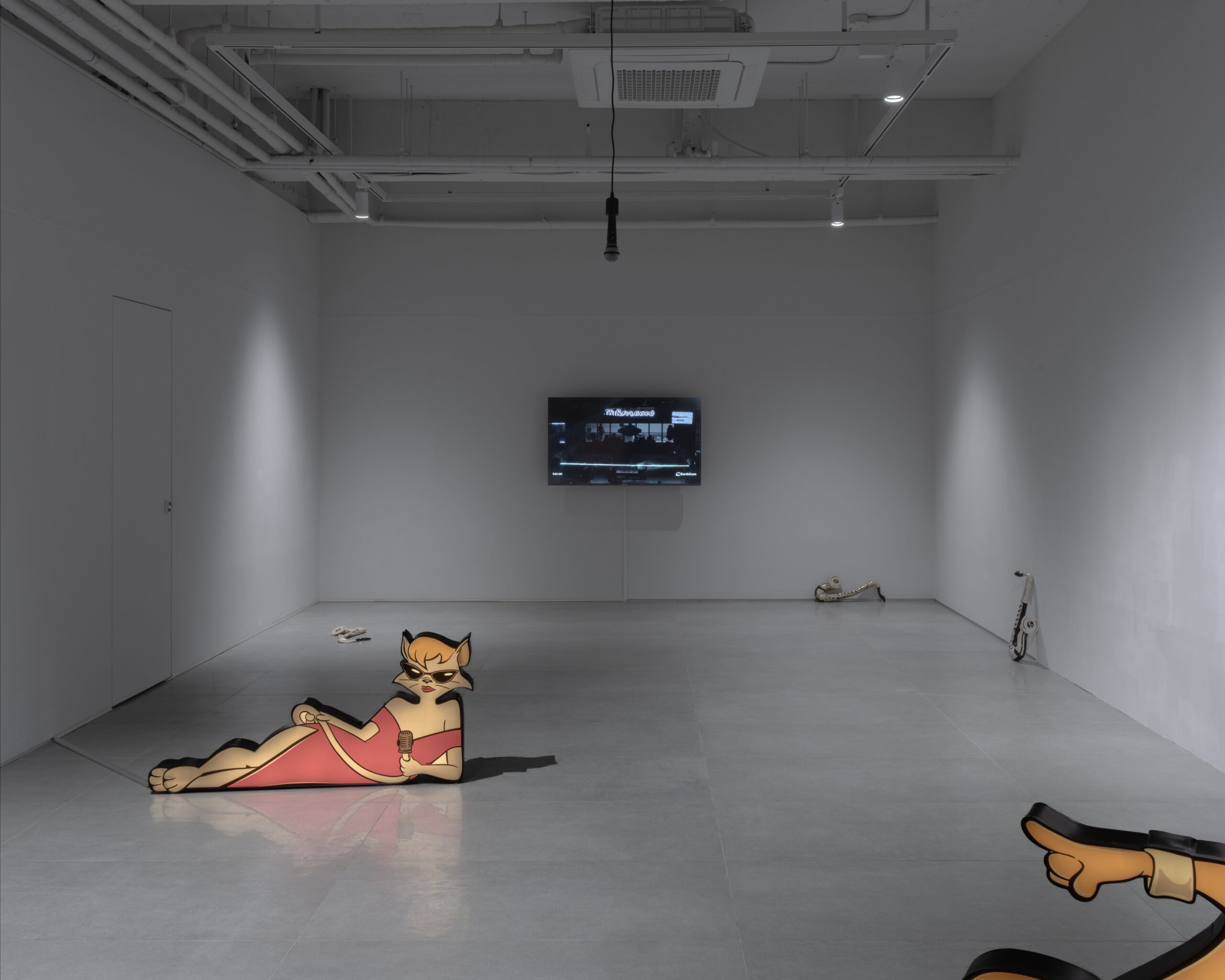
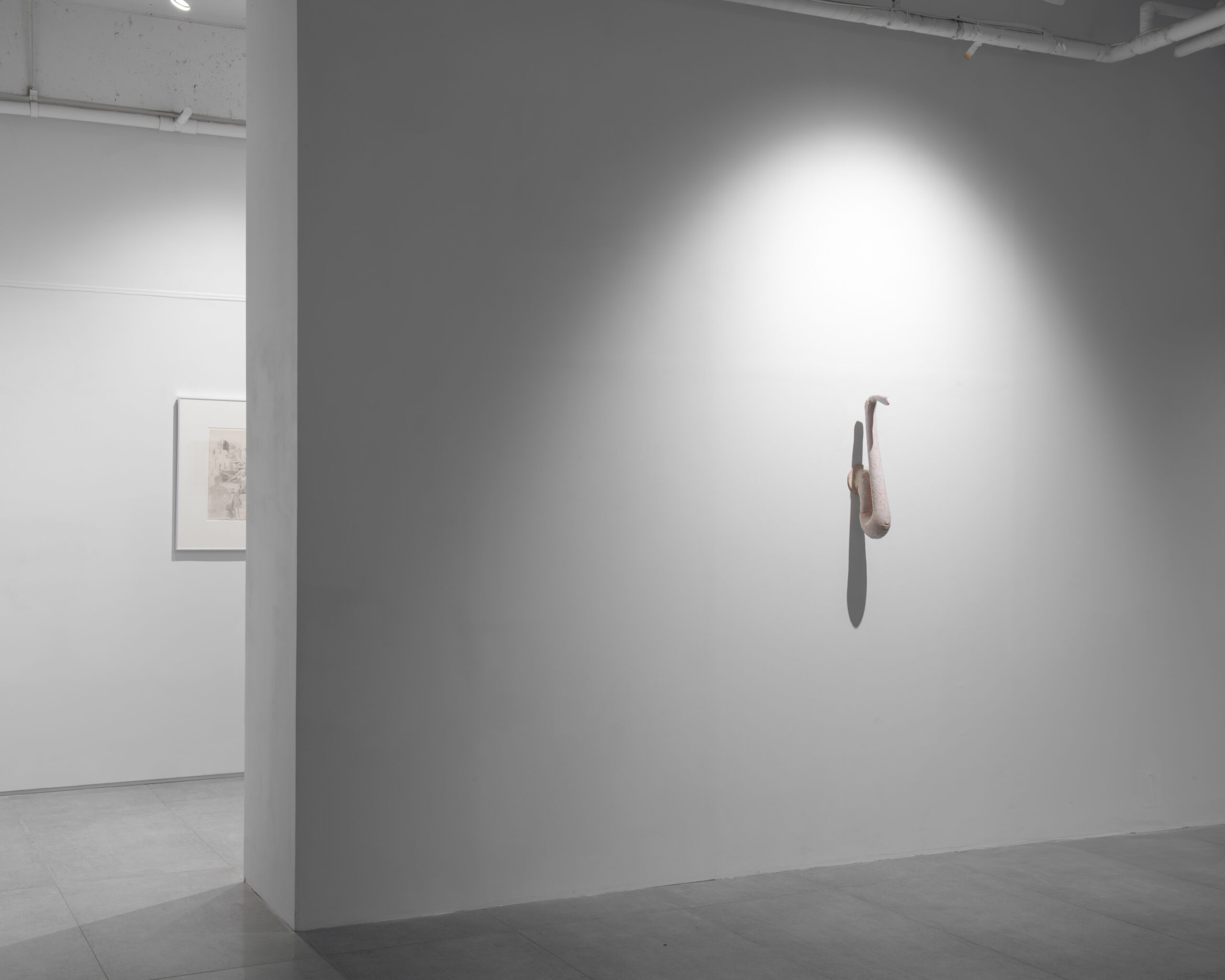
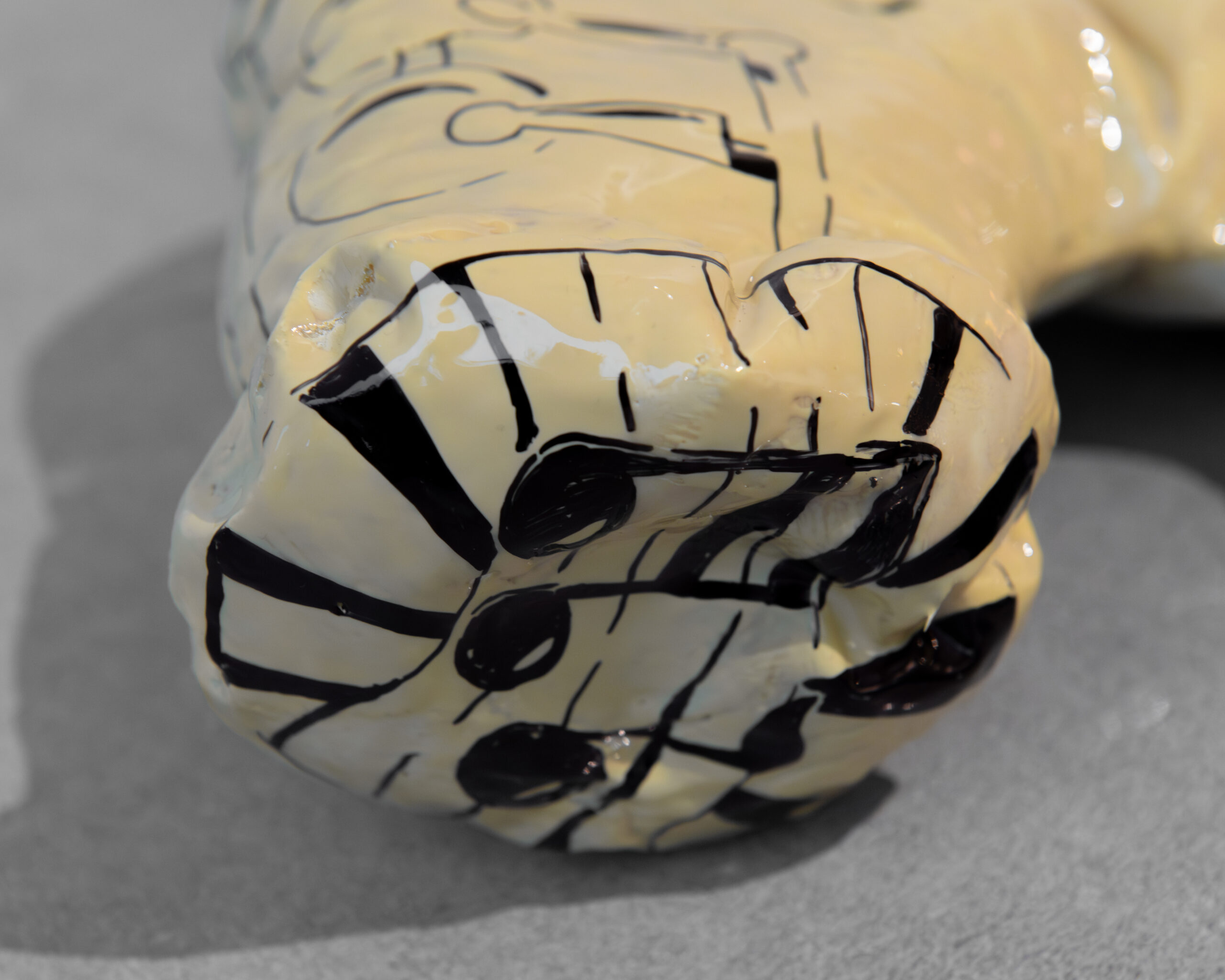
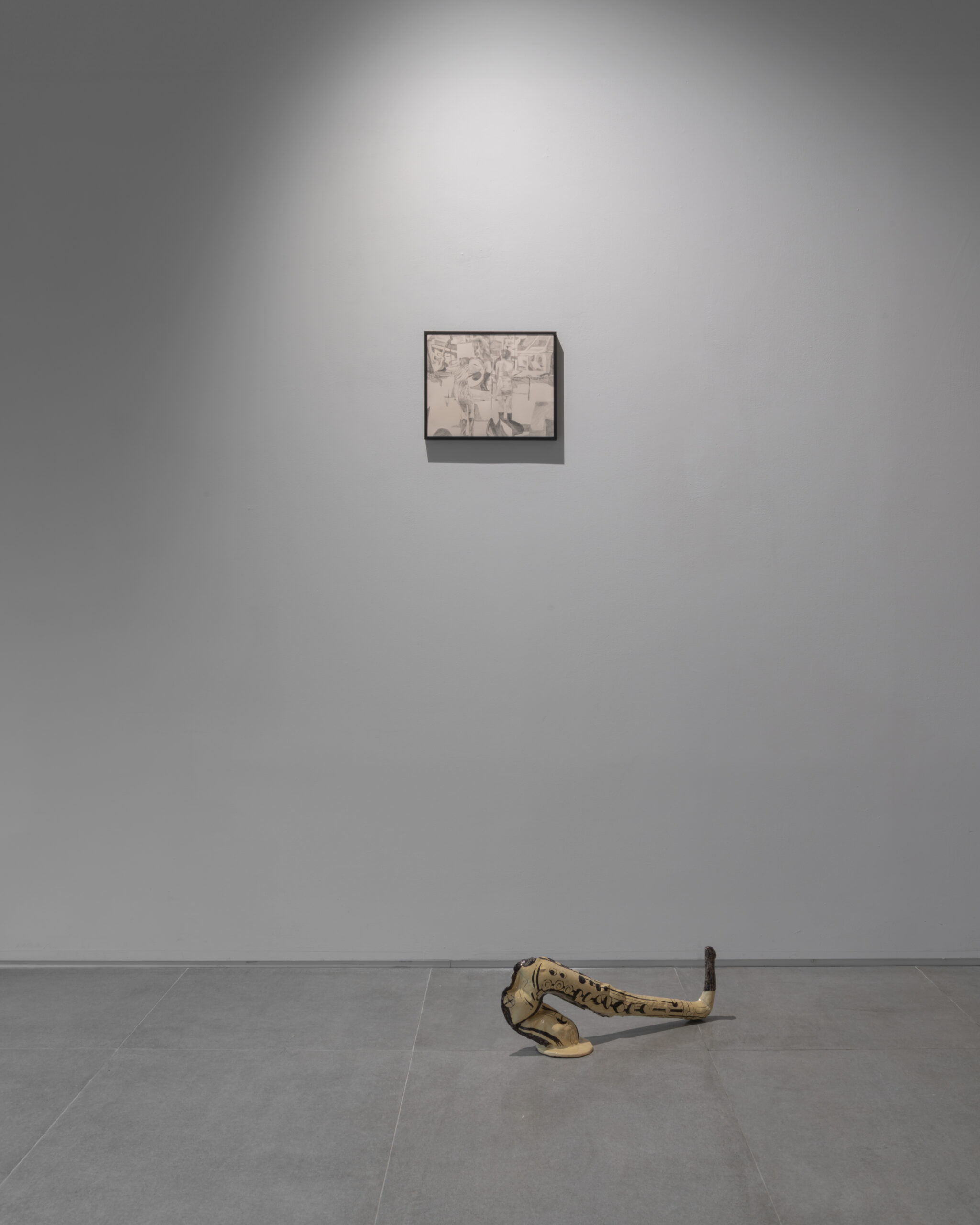
전시의 출발은 스크린이었습니다. 작가는 Cat’s Meow 웹사이트의 버추얼 투어를 탐색하던 중 기념품 코너에 걸린 풍선 색소폰을 발견했고, 그 사소한 이미지가 조각의 출발점이 되었습니다. 흥미롭게도 현장을 방문했을 때 그 오브제는 이미 사라져 있었습니다. 메간은 스크린에서만 존재하던 것을 실재의 조각으로 환원하며, ‘원본 없음’ 자체를 작품의 어휘로 삼습니다. 그녀가 만든 색소폰 조각들은 일부러 완벽을 피한 표면, 비틀림과 주름을 드러낸 형상, 바랜 색조를 유지합니다. 낮에 보면 파티 다음 날의 잔해처럼 보이고, 작가의 표현대로 ‘행오버의 몸’을 연상시키는 포스처로 남습니다. 자유 이후의 피로, 쾌락 다음의 공허, 자기표현 이후의 잔여가 몸의 자세로 침전된 상태입니다. 제목들은 ‘Smooth Operator’, ‘Edge of Glory’와 같이 매끈함과 영광을 약속하는 대중적 색소폰 곡에서 오지만, 조각의 몸은 지쳐 있고 비틀려 있으며 허술합니다. 제목이 호출하는 세계와 조각이 보여주는 세계 사이의 간극이, 성공의 표면과 실패의 몸이 동시에 남는 장면을 만듭니다. 작은 조각들이 노트처럼 반복되는 배치는 라이브 화면의 주기와 공명해, 공간 안에 느슨하지만 확실한 오스티나토를 형성합니다.
벽면의 이미지 작업은 라이브 화면에서 캡처한 장면(작가와 익명의 시청자가 함께 남긴 스틸)을 다시 인쇄하거나 그린 것으로, 관객은 단일한 작가 시선이 아닌 공동 시청의 흔적을 마주합니다. 라이브는 흐르고 스틸은 멈춥니다. 이 두 매체가 한 공간에서 맞물릴 때 관객은 ‘겪는 것’과 ‘붙잡는 것’ 사이를 왕복합니다. 보는 행위가 기록이 되고, 기록이 다시 조형이 되며 의미가 생기는 왕복 운동이 전시의 엔진입니다.
공간의 중심에는 Cat’s Meow의 마스코트 라이트박스가 있습니다. 원래 라스베가스의 간판은 욕망을 점등하고 사람의 발걸음을 유도하는 장치였지만, 전시장에 이식된 사인은 더 이상 무언가를 홍보하거나 안내하지 않습니다. 대신 믿음을 설계하던 시스템의 표면이 조형으로 남습니다. 라스베가스의 간판이 ‘환상의 진입점’이었다면, 전시장 안의 라이트박스는 ‘환상의 구조를 들여다보는 창’으로 작동합니다. 관객은 그것을 보며 “이 이미지는 어디에 속해 있었는가, 여전히 무대인가”라는 질문을 자연스럽게 통과하게 됩니다. 이처럼 라이브스트리밍, 이미지 작업, 라이트박스, 풍선 조각이 서로 다른 속도로 작동하면서 현실–중계–재현–조형의 층위가 포개집니다.
이번 프로젝트를 서울에서 보여주는 일은 단순한 중계가 아닙니다. 서울의 낮에 라스베가스의 밤이 비칠 때, 관객은 시간의 타자화를 체험합니다. 내가 속하지 않은 시간의 리듬이 지금-여기의 밝기 속에 겹쳐 들어오는 장면에서, 우리는 현장보다 시청의 역사를 마주합니다. 이 장소적·시간적 전환은 “항상 켜져 있는 세계” 속에서도 잠시 멈출 수 있는 작은 틈—불완전함이 허락되는 순간의 자유—을 감각하게 만듭니다. 메간은 우리가 살아가며 맞닥뜨리는 수많은 사회적 순간들, 입증해야 하는 자리들, 보여짐이 전제된 모든 국면을 무대로 이해합니다. 무대는 스테이지에 한정되지 않습니다. 그 무대들에서 가장 빨리 제거되는 것—머뭇거림과 어설픔, 실패의 표정과 잔여—을 끌어와 물질로 묶는 것이 이번 전시의 조형 전략입니다. 스크린에서 발견되고 현장에서 부재로 확인된 사소한 오브제가 서울의 낮이라는 시간대 속에서 다시 몸을 얻을 때, 카라오케의 공유된 플레이리스트처럼 희망은 사건이 아니라 산재한 조건으로 드러납니다. 그 조건은 크지도 화려하지도 않지만 쉽게 사라지지 않습니다. 거대한 쇼와 작은 무대가 동일한 논리로 작동하는 세상에서, 이 전시는 완벽함의 바깥에서 발생하는 작고 느린 자유의 순간들이 어떻게 축적되고, 그 안에서 살아남은 미세한 정동의 잔여가 어떻게 존재로 서는가를 서울이라는 시차의 공간 속에서 차분히 보여줍니다.
IAH presents The Cat’s Meow, the first solo exhibition in Asia by New York–based artist Megan Mi-Ai Lee. Lee’s practice begins with a persistent observation of how spectacle, belief, and failure shape the ways we see and perform ourselves today. At the core of this project lies the rare performative condition of karaoke. Karaoke is not a stage for mastery but a site where the act of attempting becomes performance itself—where failure is both anticipated and permitted. This failure is not humiliation or defeat; it is a momentary freedom that emerges precisely as imperfection continues—a time when desire remains within a bearable form. Lee turns her attention to this condition of “not needing to be good,” translating its rhythm into the spatial structure of the exhibition.
The show brings the live stream of the Las Vegas karaoke bar Cat’s Meow into Seoul’s daylight. Visitors in the gallery encounter another’s night within their own noon. When the stillness of midday intersects with the intensity of midnight, we sense the rhythm of another time beyond our own. This is where Lee’s idea of temporal otherness operates. As Las Vegas night flickers within Seoul’s brightness, the audience experiences not merely another city’s image but the bodily condition of a world that is always on—where life is perpetually visible and recorded. This time difference is not a technical device but a structural metaphor for how contemporary subjects sustain selfhood and desire within the system of visibility.
Rather than representing Las Vegas as an image, Lee dissects its operational logic. Her previous works—featuring David Copperfield’s endless show and the mythologies surrounding Howard Hughes—revealed how the narrative of success becomes a form that confines the self. Here, that lineage extends to a popular Las Vegas: a stage open to anyone, where failure is assumed. Just as audiences in magic suspend disbelief to find wonder, karaoke singers perform knowing they are not rock stars. In both, belief functions not as an event but as a condition. What Lee draws from Las Vegas is not kitsch, but the interdependence between the structures of seeing, recording, and the affect of failure.
The exhibition began with a screen. While exploring Cat’s Meow’s virtual tour, Lee discovered a balloon saxophone in the souvenir corner—an image that became the origin of her sculpture. When she later visited the site, the object had already vanished. By reconstituting what existed only on-screen into physical form, Lee adopts “absence of the original” as part of her sculptural vocabulary. Her saxophone sculptures intentionally retain twisted shapes, wrinkled surfaces, and faded hues. In daylight, they appear like party remnants—bodies in a hangover, as the artist calls them. Fatigue after freedom, emptiness after pleasure, residue after self-expression—all sediment into posture. The titles—Smooth Operator, Edge of Glory—borrow from pop saxophone anthems promising shine and triumph, yet the sculptures remain weary, bent, and fragile. The gap between the world invoked by the titles and the one embodied by the objects forms a scene where the surface of success and the body of failure coexist. Arranged in small, rhythmic repetitions, the sculptures resonate with the live stream’s temporal cycle, establishing a soft yet persistent ostinato within the space.
The wall works—printed or redrawn stills captured from the live feed—record moments shared between the artist and anonymous viewers. The live stream flows; the stills halt. As these two mediums intersect, the viewer oscillates between experiencing and holding. The act of seeing becomes recording, and recording becomes formation—this circular motion generates meaning and drives the exhibition’s engine.
At the center stands Cat’s Meow’s mascot lightbox. In Las Vegas, signs illuminate desire and direct movement; within the gallery, the transplanted sign no longer advertises but remains as the sculptural skin of belief. If the original marquee was an entry into fantasy, here it becomes a window into its structure. The viewer naturally wonders, “Where did this image belong—does it still belong to the stage?” The live feed, still images, lightbox, and balloon sculptures operate at differing tempos, layering the planes of reality, mediation, representation, and form.
Presenting this project in Seoul is more than a relay. When Las Vegas night enters Seoul’s daylight, the viewer experiences temporal displacement. In the overlap of dislocated rhythms, we encounter not the scene itself but the history of spectatorship. This spatial and temporal translation opens a small interval—a pause within the “always-on” world—where imperfection becomes a form of freedom. Lee sees every socially staged situation—moments of proving, being seen, performing—as a kind of stage. Her sculptural strategy gathers what those stages expel first: hesitation, awkwardness, traces of failure, and affective residue. When a minor object—once discovered on-screen and confirmed absent on-site—reclaims its body within Seoul’s daylight, hope emerges not as an event but as a distributed condition. Modest, unglamorous, yet persistent. In a world where grand spectacles and small stages share the same logic, The Cat’s Meow quietly traces how small, slow freedoms accumulate beyond perfection, and how the faint residues of affect endure as presence within the displaced time of Seoul.